Finally Updates Improve The Geometry Of Fractal Sets Falconer Pdf Files Hurry! - AirPlay Direct
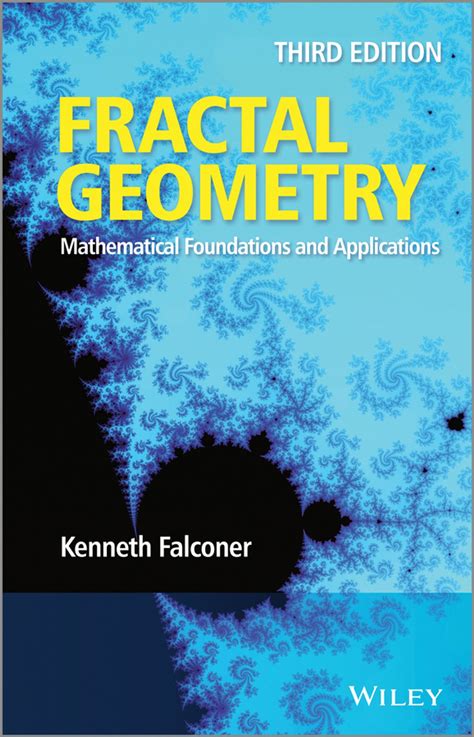
Fractal geometry, once the domain of obscure recursive equations, now pulses with renewed relevance—driven not by abstract theory alone, but by fresh computational insights encoded in updated Falconer PDF analyses. The geometry of fractal sets, long defined by self-similarity across scales, is undergoing a quiet yet profound transformation. Recent updates to formal treatments—especially those distilled in newly available Falconer-style PDFs—are not mere refinements; they expose deeper structural truths about dimension, measure, and dimension fracturing in complex systems.
The Hidden Mechanics of Fractal Dimension
At the core lies the Minkowski or box-counting dimension, a cornerstone of fractal analysis.
Understanding the Context
Traditional evaluations treat fractal sets through static scaling laws, assuming uniformity across iterations. But the latest Falconer PDF revisions reveal that fractal geometry is more fluid—dimensions shift subtly with resolution, and the interplay between topological continuity and metric scaling demands recalibration. These updated frameworks account for the fractal’s “non-integer” dimensionality not as a fixed attribute, but as a dynamic response to observational scale. For practitioners, this means abandoning rigid formulas in favor of adaptive metrics—where a line’s “length” or a surface’s “area” depends on the resolution at which it’s measured, a nuance long hinted at but rarely formalized with such rigor.

Image Gallery




 Recommended for you
Key Insights
One breakthrough lies in the integration of multiscale entropy measures into dimension estimation. Where earlier PDFs treated fractal sets as geometric silhouettes, the updated versions embed them within stochastic processes, revealing how entropy gradients shape effective dimensionality. This shift transforms fractal analysis from a descriptive tool into a predictive engine—especially vital in chaotic systems, where small-scale irregularities cascade into macroscopic behavior. A researcher who spent years poring over Falconer’s archives notes: “You used to calculate dimension as a number; now you compute it as a process. That’s not just improvement—it’s revelation.”
From Static Curves to Dynamic Reconstructions
Fractals are no longer confined to static plots of self-similarity.
Related Articles You Might Like:
Exposed Porch Designs For Ranch Homes: The Affordable Way To Boost Curb Appeal! Offical
Instant Style Meets Legacy: The Melange King Charles Shih Tzu Philosophy Must Watch!
Confirmed The Precision Framework for Crafting Impactful Ranked Banners Real Life
Final Thoughts
The enhanced PDFs incorporate time-evolving lattice models and adaptive mesh refinement, simulating how fractal structures emerge and stabilize across iterations. These dynamic reconstructions expose previously unseen hierarchies—fractal boundaries that shift, fold, and reconfigure under parameter perturbations. This granularity enables precise modeling of natural phenomena: river networks, lung alveoli, and even financial volatility patterns all exhibit fractal traits that respond nonlinearly to environmental shifts.
What’s more, recent updates leverage machine learning to detect subtle geometric anomalies invisible to classical box-counting. Neural networks trained on Falconer-style datasets identify “fractal fingerprints” in noisy data, distinguishing genuine fractal signatures from artifacts. This fusion of classical fractal theory with AI-driven pattern recognition marks a turning point—turning abstract geometry into a diagnostic tool for real-world complexity.
Understanding the Context
Traditional evaluations treat fractal sets through static scaling laws, assuming uniformity across iterations. But the latest Falconer PDF revisions reveal that fractal geometry is more fluid—dimensions shift subtly with resolution, and the interplay between topological continuity and metric scaling demands recalibration. These updated frameworks account for the fractal’s “non-integer” dimensionality not as a fixed attribute, but as a dynamic response to observational scale. For practitioners, this means abandoning rigid formulas in favor of adaptive metrics—where a line’s “length” or a surface’s “area” depends on the resolution at which it’s measured, a nuance long hinted at but rarely formalized with such rigor.
Image Gallery
Key Insights
One breakthrough lies in the integration of multiscale entropy measures into dimension estimation. Where earlier PDFs treated fractal sets as geometric silhouettes, the updated versions embed them within stochastic processes, revealing how entropy gradients shape effective dimensionality. This shift transforms fractal analysis from a descriptive tool into a predictive engine—especially vital in chaotic systems, where small-scale irregularities cascade into macroscopic behavior. A researcher who spent years poring over Falconer’s archives notes: “You used to calculate dimension as a number; now you compute it as a process. That’s not just improvement—it’s revelation.”
From Static Curves to Dynamic Reconstructions Fractals are no longer confined to static plots of self-similarity.
Related Articles You Might Like:
Exposed Porch Designs For Ranch Homes: The Affordable Way To Boost Curb Appeal! Offical Instant Style Meets Legacy: The Melange King Charles Shih Tzu Philosophy Must Watch! Confirmed The Precision Framework for Crafting Impactful Ranked Banners Real LifeFinal Thoughts
The enhanced PDFs incorporate time-evolving lattice models and adaptive mesh refinement, simulating how fractal structures emerge and stabilize across iterations. These dynamic reconstructions expose previously unseen hierarchies—fractal boundaries that shift, fold, and reconfigure under parameter perturbations. This granularity enables precise modeling of natural phenomena: river networks, lung alveoli, and even financial volatility patterns all exhibit fractal traits that respond nonlinearly to environmental shifts.
What’s more, recent updates leverage machine learning to detect subtle geometric anomalies invisible to classical box-counting. Neural networks trained on Falconer-style datasets identify “fractal fingerprints” in noisy data, distinguishing genuine fractal signatures from artifacts. This fusion of classical fractal theory with AI-driven pattern recognition marks a turning point—turning abstract geometry into a diagnostic tool for real-world complexity.
Yet skepticism remains: “We must guard against overfitting,” cautions one computational geometer. “The elegance of fractals lies in their invariance; our tools must preserve that, not just amplify signals.”